The Dying Citizen
by Victor Davis Hanson
5.0/5
by Victor Davis Hanson
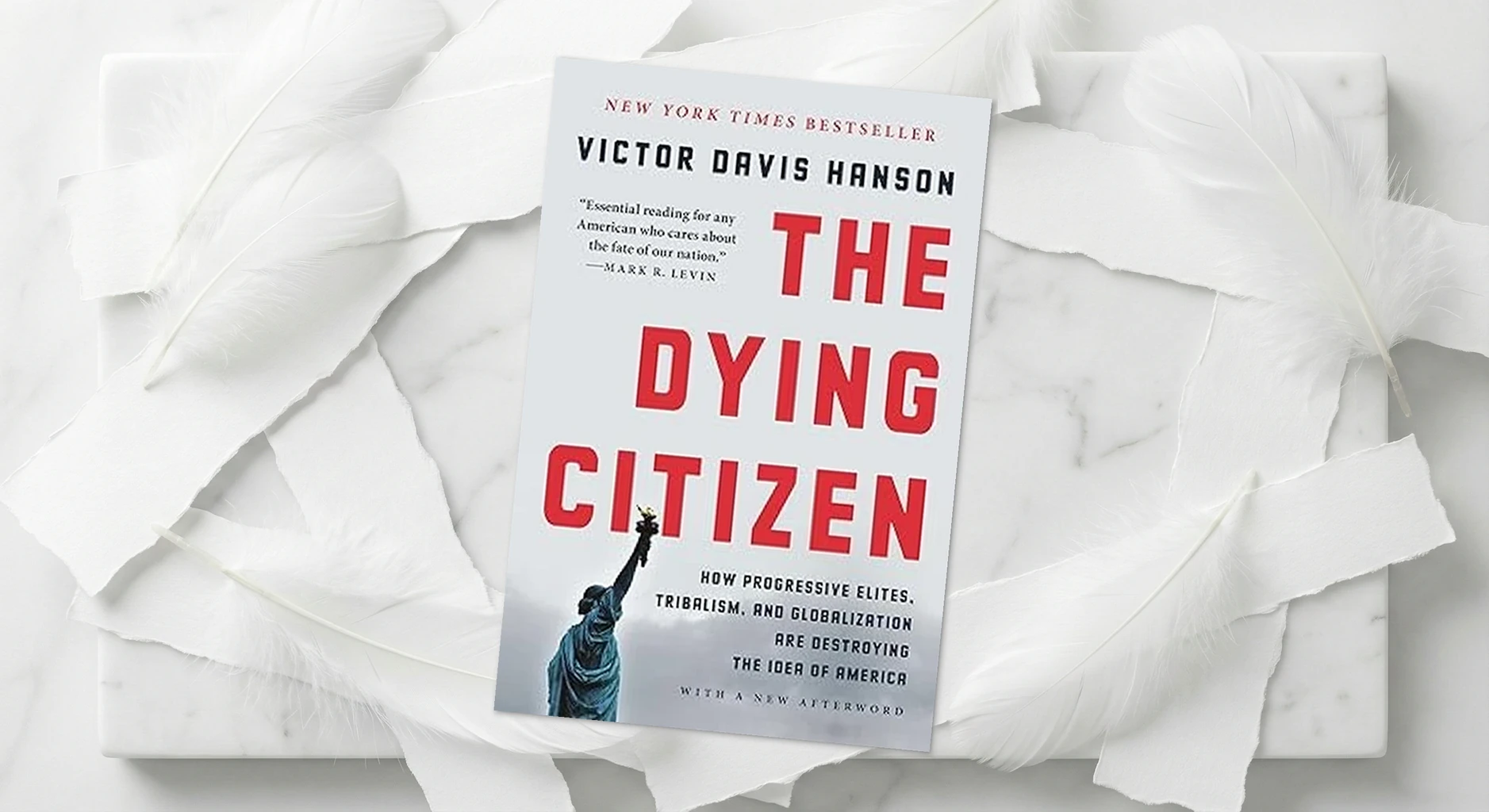
Victor Davis Hanson’s latest work is a powerful examination of the waning power of citizenship in America. In the pages of The Dying Citizen, he crafts a compelling narrative that resonates deeply with our current socio-political climate. As I flipped through its pages, each chapter felt like a conversation with a learned friend, one who draws from history and experience to paint a vivid picture of where we find ourselves today.
Hanson deftly illustrates the evolution of the concept of citizenship, juxtaposing the ideals that once unified us with the realities of a fragmented society. His arguments are both compelling and urgent, as he discusses the implications of open borders, unchecked immigration, and the erosion of civic responsibility. With each turn of the page, I felt the weight of his words pressing down on me, a reminder of how much we stand to lose if we do not guard the notion of citizenship—an idea that has been foundational to American identity.
At its core, The Dying Citizen argues that the traditional understanding of citizenship is at risk. I found myself engaged not just by the arguments, but by the way Hanson weaves historical anecdotes and current events seamlessly together. It’s as if he’s taking us on a winding journey through time, showing how decisions made decades ago have led us to the present moment. For instance, he references how the expansion of welfare states and the lack of a common national identity have reshaped the very fabric of what it means to be an American.
What struck me most was Hanson’s passionate defense of the citizen’s role in a democracy. He reminds us that citizenship is not merely a status; it’s a responsibility, a commitment to engage actively in the civic life of our nation. As I read those passages, I couldn’t help but reflect on my own role and the roles of those around me—my friends, family, and neighbors. We often get caught up in our busy lives, distracted by the mundane, forgetting that civic engagement is more crucial now than ever.
My friends who have also read The Dying Citizen echoed similar sentiments. They appreciated how Hanson doesn't shy away from discussing the uncomfortable truths about our society, urging us to confront the complexities of identity and responsibility head-on. It’s refreshing to read a book that invites debate rather than simply affirming what we might already believe. One friend remarked on how Hanson’s historical perspective ground his arguments in a way that made them feel both relevant and timeless.
The author also touches on globalization, highlighting how it threatens to dilute national identity. This point resonated with me, especially in our increasingly interconnected world. We live in an era where borders seem more porous than ever. Yet, with that comes a risk of losing the shared values that bind us together as a nation. Hanson urges us to reclaim those values, to remember the history and struggles that shaped them.
Hanson’s writing flows effortlessly, his prose elegant yet accessible. He knows how to wield words like a sculptor chiseling away at marble, revealing the form hidden within. His sentences ebb and flow, building momentum before delivering impactful conclusions. There’s a rhythm to his writing that kept me engaged, eager to see where he would take me next.
Some of my favorite parts of the book came when he invoked historical figures and events, drawing parallels between their struggles and our current challenges. For instance, he references the founding fathers and their vision for citizenship, making it clear that the ideals upon which this country was built are worth fighting for. These moments of insight deepened my understanding of the stakes involved in our current debates over citizenship and identity.
Of course, no book is without its critiques, and while I found The Dying Citizen to be incredibly thought-provoking, some of my friends expressed a desire for more concrete solutions to the issues raised. They felt the urgency of his arguments deserved a blueprint for action, a way forward amidst the turmoil. While Hanson presents a passionate case for the rejuvenation of citizenship, it left some readers wondering about the practical steps we can take to enact that change.
Yet, I believe that’s part of the beauty of this work. It sparks dialogue, encourages reflection, and, most importantly, pushes us to think critically about our roles as citizens. In a time when many feel disillusioned with the political process, Hanson reminds us that we cannot afford to be passive participants. Citizenship is an active endeavor, one that requires engagement and commitment.
As I closed the book, I found myself contemplating the future. What does it mean to be an American in today’s world? How do we preserve the essence of citizenship amid the pressures of globalization and political division? The Dying Citizen doesn’t provide all the answers, but it certainly ignites the questions that matter.
This book is more than just a read; it’s a call to action. It challenges us to reflect on our individual roles in shaping the discourse around citizenship. I walked away feeling empowered, ready to engage more actively in the civic life of my community. For anyone seeking to understand the complexities of citizenship in America today, I wholeheartedly recommend Victor Davis Hanson’s The Dying Citizen. It’s a timely reminder that while the concept may be waning, it is not yet dead. It can, and must, be revived.