The Librarian Spy
by Madeline Martin
4.5/5
by Madeline Martin
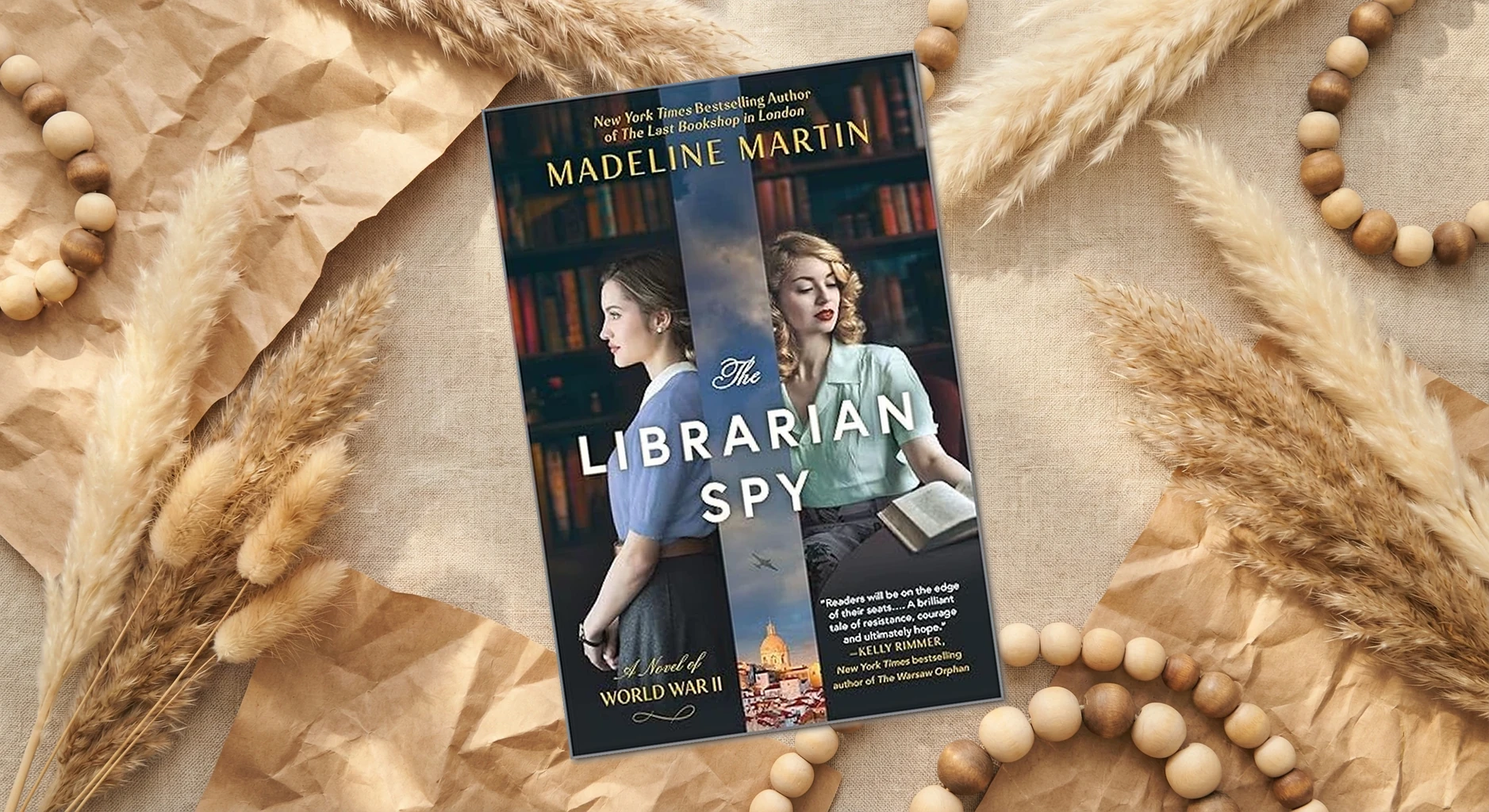
Madeline Martin's latest novel takes readers on an evocative journey through the shadows of World War II, immersing us in a world where the cards are stacked against ordinary people. The narrative revolves around a young female librarian who becomes a spy, a daring twist that makes it not just a tale of war, but a celebration of bravery and resilience in the face of tyranny.
Right from the start, I found myself entranced by the atmosphere of the story. The author's ability to conjure up the sights, sounds, and smells of 1940s Europe is nothing short of magical. Each page turned seemed to bring history to life in vivid color. Martin crafts settings that feel like characters themselves, each with its own pulse, its own mood. You can almost hear the distant echoes of war, the crackle of propaganda, and the whispered fears of those caught in the crossfire. It’s immersive, to say the least.
The protagonist, a bookish woman who initially feels confined by her circumstances, evolves into a formidable force. It's refreshing to see a character arc that doesn’t just revolve around romance or traditional heroism. Instead, we witness her transformation as she steps out of the library’s comforting embrace and into a world fraught with danger and intrigue. I couldn't help but root for her. Her journey reflects the struggle for agency that many faced during this tumultuous time. It’s a poignant reminder that sometimes, it takes the most unexpected circumstances to reveal one’s true strength.
As I read, I couldn't help but think of my friends who dive headfirst into historical novels. They would absolutely appreciate the depth of research that Martin has put into this story. The historical context is rich, yet it never overwhelms the narrative. Instead, it enhances it, grounding the characters' experiences in a reality that resonates with authenticity. It’s this balance that makes the story not only engaging but also educational. I found myself stopping occasionally to look up events or figures mentioned, eager to piece together the full picture.
The emotional landscape is as complex as the political one. Martin doesn’t shy away from depicting the horrors of war, yet she also highlights the moments of humanity that shine through the darkness. Some scenes left me breathless, both from tension and from sorrow. The camaraderie among the characters, the moments of levity in the bleakness, and the quiet acts of defiance remind us that even in the darkest times, hope persists.
I must admit, I was also pleasantly surprised by the relationship dynamics woven through the narrative. They felt genuine and multi-layered. Characters aren't just placeholders; they’re fleshed out, with their own dreams, fears, and motivations. Each character serves a purpose, whether they stand beside the protagonist or play an opposing role. The interactions are layered with complexity, offering insights into human nature and relationships during times of crisis.
One thing that struck me as I read the pages was how Martin's writing style flows. It’s lyrical yet grounded. There’s a rhythm to her prose that makes it a joy to read. The dialogue feels authentic, with characters expressing themselves in ways that feel honest to their time and circumstances. It’s not just about telling a story; it’s about immersing the reader in it, making them feel as if they are walking alongside the characters, sharing in their triumphs and tribulations.
As I discussed this book with my friends who have also read it, we marveled at the themes of courage and sacrifice. They resonated deeply, especially given the current state of the world. The novel feels timely, reminding us of the importance of standing up against tyranny and fighting for what is right, even when the odds are stacked against us. It’s a universal message that transcends the specific historical context, making it relevant for today’s readers.
One of my friends pointed out how the author captures the nuances of female empowerment without resorting to clichés. The protagonist's journey of self-discovery and empowerment is beautifully rendered, showcasing how women have always played pivotal roles in history, even when their contributions were often overlooked or dismissed.
No book is without its flaws. There were moments, especially in the second act, where the pacing slowed a bit. While I understand that character development takes time, I yearned for the plot to regain its momentum sooner. I think that’s a natural tension in historical fiction — balancing deep character exploration with the urgency of the plot. Yet, these moments didn’t significantly detract from my overall enjoyment.
The ending, while satisfying, left me with lingering questions. It’s a hallmark of a good book when you find yourself reflecting on the characters’ choices long after you’ve turned the last page. I’m still pondering some of the moral dilemmas presented, the sacrifices made, and the legacies left behind. It’s a testament to Martin’s skill that she encourages such contemplation, provoking thought well beyond the confines of the story.
If you’re looking for a novel that combines the thrills of espionage with rich historical detail and deeply resonant themes, you can’t go wrong with this. It’s a celebration of resilience, a reminder that even in chaos, the strength of the human spirit can shine through. In my opinion, this is a book worth adding to your shelf. It’s perfect for those quiet evenings when you want to lose yourself in a world that feels both foreign and achingly familiar.
So grab a cozy blanket, a cup of tea, and let yourself be swept away by the sweeping prose and powerful storytelling. I promise, it’s a journey you won’t regret embarking on.