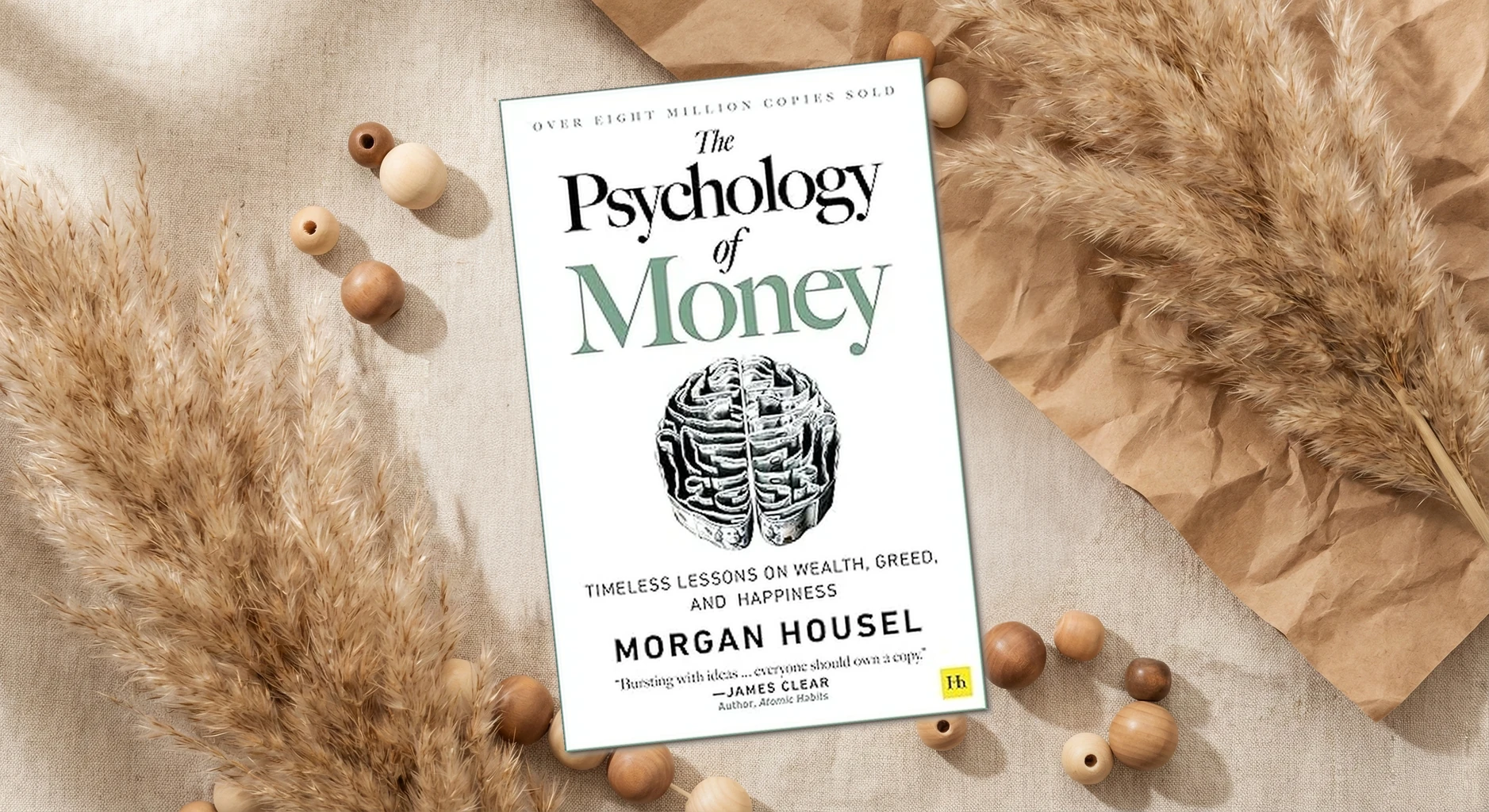
There’s something infinitely fascinating about how we relate to money and the myriad ways it influences our lives. In his thought-provoking book, Morgan Housel takes an unconventional approach to the topic, exploring the emotional, psychological, and behavioral aspects that underlie our financial decisions. I recently dove into this engaging read, and I found myself reflecting on my own experiences with money and how they mirror Housel's insights.
From the start, Housel captivates readers with a conversational tone that feels oddly intimate, as if he's having a chat over coffee rather than lecturing us from a podium. He takes on the complex interplay between wealth, greed, and happiness with a refreshing candor. It’s not just a manual on how to get rich, but rather an exploration of the mindset that governs our financial behaviors.
One of the most striking themes Housel presents is that financial success is not purely about knowledge or intelligence; it’s about behavior. “It’s not what you know, it’s how you act,” he argues, a sentiment that resonates deeply. Managing money involves a level of emotional intelligence that often goes overlooked. He emphasizes that our experiences, upbringing, and even our personalities shape the way we view money. For example, those who grew up in scarcity may hoard wealth, while those who were raised in abundance might squander it. This personalization of financial behavior was a real eye-opener for me, making me reflect on my own financial tendencies and the underlying emotions that drive them.
Housel also cleverly intertwines anecdotes and historical examples throughout the narrative, which keeps the reader engaged. One particularly memorable story involves the famed investor Warren Buffett, who advocates for patience and long-term thinking in investing. Housel illustrates how Buffett’s success is not merely linked to his financial acumen but rather his understanding of human psychology and the value of time. This notion of patience resonates in a world that often prioritizes instant gratification over long-term stability.
The author’s writing is peppered with thought-provoking quotes and sayings that linger long after reading. For instance, “Wealth is what you don’t see,” succinctly encapsulates the idea that true wealth is often invisible—it’s not the flashy cars or ostentatious homes we associate with success. This sentiment pushed me to reconsider how I perceive others’ financial situations and my own. We often make comparisons based on appearances, but Housel challenges us to look beyond them to understand the deeper narratives of wealth.
Another key takeaway from the book is the notion that money can’t buy happiness, but it can create opportunities for it. Housel discusses how people often mistakenly link happiness directly to wealth, leading to a relentless pursuit of more. Yet, he adeptly points out that fulfillment often comes from meaningful experiences, relationships, and a sense of security. This poignant observation hit home for me, as I reflected on my own life—how the best moments weren’t necessarily the ones tied to spending but rather those shared with loved ones.
As I read further, I found myself underlining passages and nodding along in agreement. Housel’s insights on risk and uncertainty are particularly compelling. He emphasizes that our relationship with risk is intricately tied to our personal stories. For instance, someone who has faced financial hardship may approach investment opportunities with extreme caution, while another who has always had a safety net may take risks without thinking twice. This connection between past experiences and current financial decisions is something I’d never consciously considered before, but it explains so much about my own hesitations and ventures in the financial world.
I also appreciated how Housel makes the case that intuition often trumps fancy graphs and statistics when it comes to financial decisions. He argues that our instincts, shaped by our unique life experiences, often guide us better than any algorithm or market analysis. This idea was liberating for me—reminding me that my gut feelings about money and investment are valid contributors to my financial narrative.
The Psychology of Money ultimately invites readers to reflect on their personal relationship with money. It urges us to recognize our biases, understand our behaviors, and approach financial decisions with a sense of empathy—not just for ourselves, but for others as well. Housel masterfully illustrates that there’s no one-size-fits-all approach to wealth; it’s as varied and diverse as the people who pursue it.
The feedback from other readers echoes my sentiments. Many have hailed this book as a “must-read,” applauding its ability to resonate with people from all walks of life, regardless of their financial literacy. It’s refreshing to see such enthusiasm for a book that strays from the traditional advice-driven narrative we often encounter in personal finance literature. Readers have noted how the stories and lessons shared encourage a shift in perspective, fostering a more profound understanding of why we do what we do with money.
I would rate The Psychology of Money a solid 4.5 out of 5. It’s not just a financial book; it’s a deeply personal exploration that invites self-reflection. Housel’s insights linger long after the last page is turned, reminding us that our journeys with money are as much about our hearts and minds as they are about our wallets. If you’re looking for a book that not only informs but also transforms your perspective on wealth, greed, and happiness, I couldn’t recommend this one more. It’s a conversation starter, a memory jogger, and ultimately, a guide to understanding the complicated yet fascinating world of our finances.