We Are All Guilty Here
by Karin Slaughter
4.5/5
by Karin Slaughter
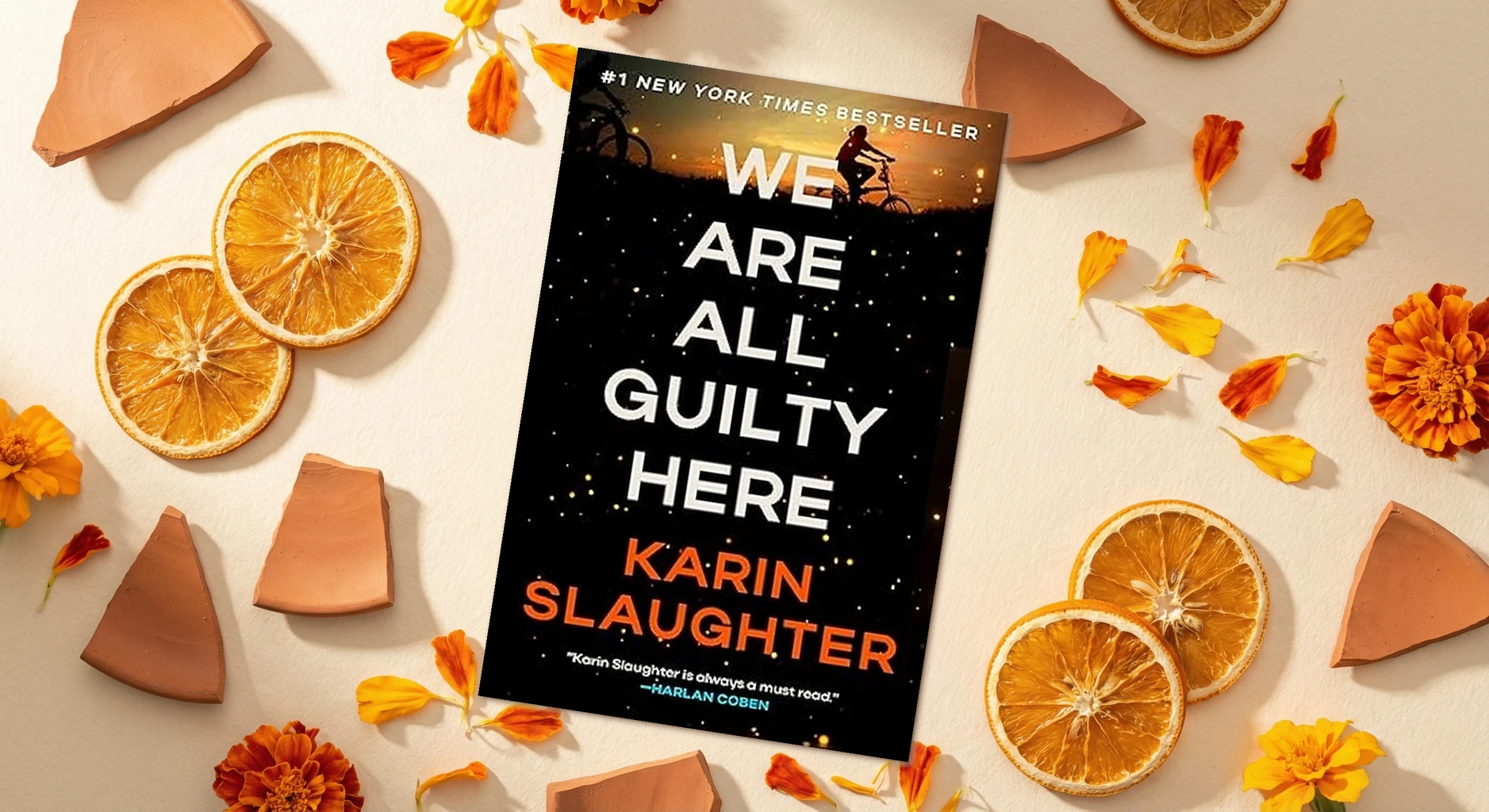
It’s rare to find a book that can simultaneously captivate and leave you questioning the very fabric of human nature, but Karin Slaughter’s latest work achieves that with an uncanny deftness. As I turned the pages, I was drawn into a world that felt both intimately familiar and disturbingly foreign, a testament to Slaughter’s masterful storytelling.
The narrative is woven with a stunning complexity, painting a picture where secrets, lies, and moral ambiguities intertwine. The characters are beautifully flawed, existing in shades of gray rather than the typical black and white. This is not just a story; it’s an exploration of guilt, accountability, and the lengths to which people will go to protect their own.
Slaughter has a knack for delving deep into her characters’ psyches. Every decision feels heavy with consequence. There’s a moment when the protagonist confronts the specter of their past actions, and it’s breathtaking. You can almost feel the weight of those choices pressing down on them, the repercussions rippling outward like stones tossed into a still pond. I found myself reflecting on my own life choices, questioning what I would do in their shoes. Would I be brave enough to confront my own guilt? Would I bury it deep, hoping it would stay hidden? It’s a haunting thought.
The pacing of this book is superb. Slaughter expertly alternates between moments of intense action and quieter, more introspective passages. One moment, I was holding my breath, caught in a thrilling chase, and the next I was lost in the labyrinth of a character’s thoughts, contemplating their next move. It was exhilarating. It reminded me that life isn’t just about the big moments; it’s also about the quiet decisions that shape our paths.
Critics and readers alike have praised Slaughter’s ability to create tension. She doesn’t simply rely on shocking twists or cliffhangers; instead, she builds an atmosphere thick with suspense. You can feel it in the air, like static before a storm. This book had me on the edge of my seat, wondering what would come next. I often found myself whispering, “No, don’t do that!” to characters making choices that I knew would lead to trouble. I was invested.
And let’s talk about the themes. The exploration of guilt and the concept of collective responsibility struck a chord with me. In a world so often divided, it’s easy to forget the power of empathy and the importance of accountability. Slaughter doesn’t shy away from these complexities; she embraces them, challenging the reader to grapple with uncomfortable truths.
This brings me to the characters themselves. They are not merely vessels for the plot; they are richly drawn individuals with their own histories, desires, and regrets. I particularly connected with a character who wrestles with their past in a way that felt achingly real. The moments of vulnerability—those raw, unguarded confessions—made my heart ache. It’s through these delicate portrayals that Slaughter showcases her strength as a writer.
Readers and critics have echoed my sentiments. Many have lauded the book as “a powerful exploration of guilt and redemption, with characters that leap off the page.” Others have remarked on how Slaughter’s prose can evoke visceral reactions, making it impossible to forget the stories she tells. “You’ll feel the weight of every word,” one reviewer noted, and I couldn’t agree more.
But, let’s not forget the darker aspects of the narrative. There’s a stark realism to the violence in Slaughter’s writing that makes it all the more impactful. It’s not gratuitous; it serves a purpose. Each act of violence has ramifications, each decision a ripple effect. I found myself contemplating the nature of justice and how it can be so easily warped by personal bias. Slaughter invites us to ponder: What is justice, really? And who gets to define it?
As the plot unfolds, I realized that the true heart of the story lies not just in the mystery itself but in the characters’ relationships with one another. The bonds forged through shared trauma, the fractures caused by betrayal, and the tenuous threads of forgiveness—all of these elements come together to create a tapestry of human experience that is rich and layered. I often paused to reflect on my own relationships, the complexities that come with them, and the ways in which we often hold on to hurt rather than healing.
It’s worth noting, too, that Slaughter’s ability to write women is particularly noteworthy. She crafts strong, nuanced female characters who defy stereotypes and challenge expectations. Their strength lies not in invulnerability but in their willingness to confront their fears, to embrace their flaws, and to fight for what they believe in. It’s a refreshing and empowering portrayal that resonates deeply in today’s landscape.
Now, while I hold this book in high regard, I did feel that some of the subplots could have been more fleshed out. There were moments when I wanted to dive deeper into certain character arcs, to explore their motivations more thoroughly. However, this is a minor critique in the grand scheme of things. The overall narrative arc is compelling and satisfying, delivering a resolution that feels earned.
As I reached the final pages, I couldn’t help but feel a mix of satisfaction and melancholy. The conclusion brings closure, yet it also leaves you pondering the complexities of the human experience. It’s a bittersweet reminder that life doesn’t always tie up neatly in a bow.
In a world where we often rush to conclusions, this book serves as a reminder to pause, to reflect, and to understand the intricacies of our actions. It challenges us to ask the hard questions and seek the truth within ourselves.
So, if you’re looking for a gripping read that will make you reflect on your own life choices while keeping you on the edge of your seat, I highly recommend diving into this one. Karin Slaughter has once again proven that she’s a powerhouse in the literary world, capable of crafting stories that resonate long after the final page has been turned.
In the end, we are all guilty here—not just of our actions, but of our inactions, our silence, and our complicity. And that’s what makes Karin Slaughter's work not just a thriller, but a profound exploration of the human condition.