The Invention of Wings
by Sue Monk Kidd
4.5/5
by Sue Monk Kidd
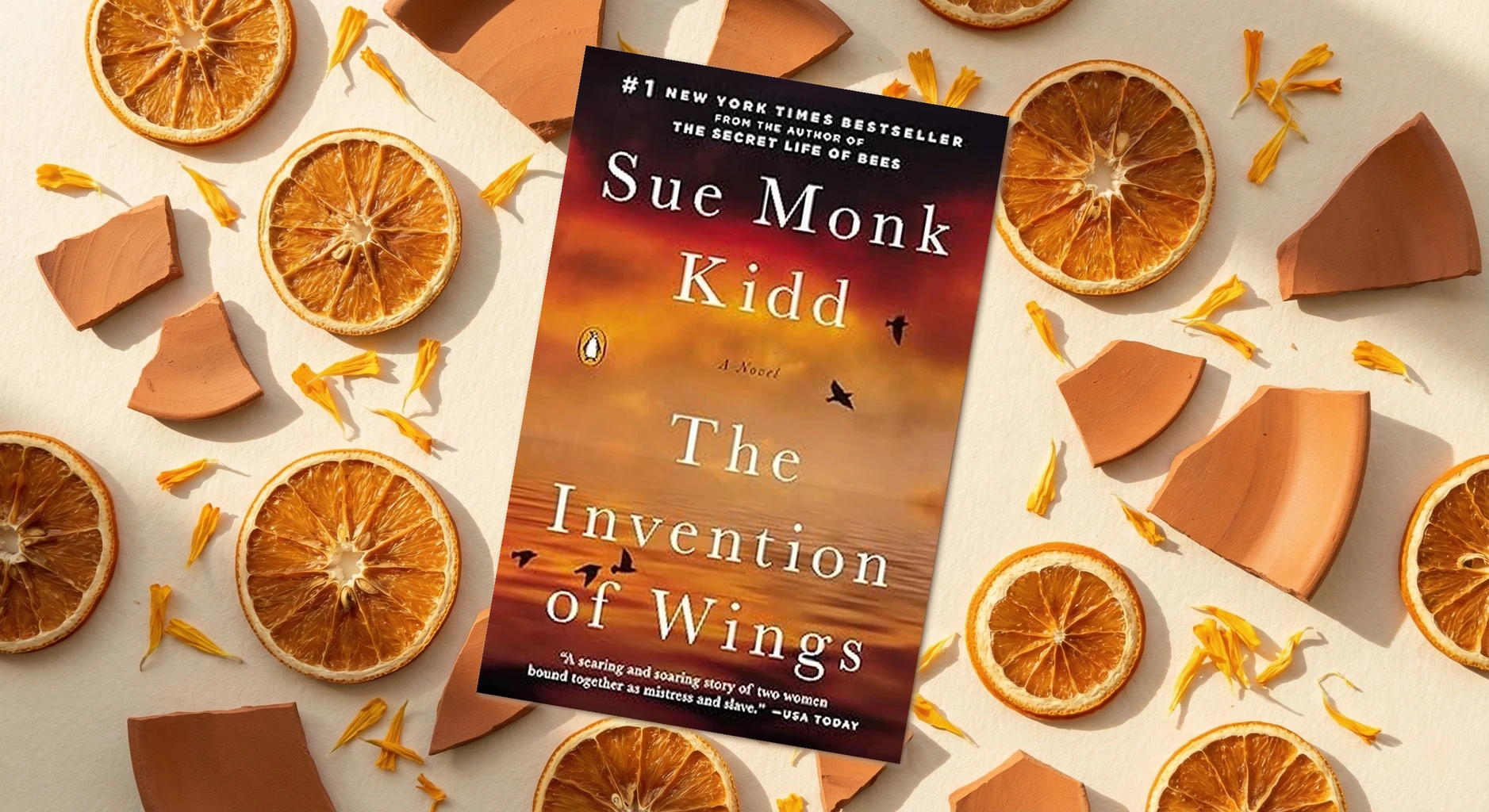
Reading Sue Monk Kidd’s exploration of freedom, oppression, and the fierce spirit of sisterhood was like taking a deep breath in a room thick with history. Though I dove into the pages expecting a profound narrative, I emerged with a heart full of feelings, and perhaps just a little more knowledge about the weight of societal chains—both self-imposed and around us.
The novel takes us on a journey through the lives of two women, the first being the spirited Hetty “Handful” Grimke, a young enslaved girl, and the other Sarah Grimke, a white woman born into privilege yet shackled by societal expectations. Readers are invited into their lives as they navigate the tumultuous waters of early 19th-century America—where the lines between freedom and servitude are blurred, and the fight for one’s voice becomes a powerful act of rebellion.
Kidd’s prose is rich and melodic. She dances through time, weaving past and present with a graceful rhythm that pulls you in. “I’m a slave. I’m a woman. I’m not free, but I will be.” Handful’s voice is a clarion call—a jubilant, defiant proclamation that echoes through the ages. It is not just her story, but the story of so many who have struggled and fought for their individuality against the backdrop of a society that seeks to diminish them.
What struck me most was the contrast between the two women. Handful, trapped in the confines of slavery, represents the rawness of survival. Her spirit is unyielding, her dreams vivid and vibrant, even when reality darkens around her. Meanwhile, Sarah, who enjoys the privilege of her race, grapples with her own constraints—those imposed by her family and society that dictate what a woman should be. The duality of their experiences serves as a mirror exposing the painful realities of prejudice, gender roles, and the complex intersections of race and class.
Kidd portrays their relationship with tenderness and complexity. The bond they share is fraught with tension, yet it is also filled with moments of compassion and understanding. As Handful teaches Sarah about the art of quilting—a craft used to express emotions and stories—readers witness the emergence of a profound friendship that defies the norms of their time. Through their interactions, Kidd deftly explores themes of empowerment, self-expression, and the importance of finding one’s voice.
One poignant moment unfolds when Sarah, grappling with her own doubts and fears, seeks solace from her enslaved sister. “You are enough just as you are,” Handful tells her, a reminder that resonates deeply. In a world that constantly pressures women to conform to certain ideals, that message feels revolutionary. It is a powerful thread that runs through the fabric of the story, reminding readers that the fight for personal freedom and authenticity is universal.
Kidd also honors the historical context with meticulous detail, illuminating the abolitionist movement in a way that feels immediate and urgent. Sarah’s journey evolves from that of a compliant daughter to an outspoken advocate for equality, her activism sparking a fire that would resonate through generations. “You can’t be a witness to injustice and not act,” she declares, a sentiment that reverberates in today’s world.
Though the narrative is steeped in historical events, it is the emotional core that makes it resonate. The love, loss, and the struggle for identity are threads that connect us all regardless of time or circumstance. As I turned the final pages, I found myself reflecting on my own journey—the expectations I’ve confronted, the battles I’ve fought.
What I appreciated most was how Kidd crafted a narrative that was deeply empowering. The Invention of Wings speaks to the heart of what it means to be human, challenging us to confront the injustices of our society and to rise above them. The novel presents a powerful call to action, not just for women, but for everyone who has ever felt the weight of constraints whether they be societal, familial, or self-imposed.
The novel is not without its criticisms. Some readers found Kidd’s approach to the historical elements a bit didactic at times, feeling that the narrative slowed under the weight of its moral lessons. Yet, for me, those moments were necessary pauses—inviting contemplation and reflection in a world that often rushes by.
In conversations with friends and fellow book lovers, I’ve found that responses to The Invention of Wings are as varied as the characters themselves. Some praised its lyrical quality and emotional depth, while others pointed towards a desire for a more nuanced exploration of the complexities of race and gender. This divergence in opinion only highlights the power of the narrative. It sparks dialogue, urging readers to reflect on their own beliefs and experiences.
As I wrapped myself in the layers of this novel, I felt a sense of urgency in Kidd’s storytelling. The characters’ struggles are not simply relics of the past; they echo in the present day. Whether tackling issues of racial inequality, gender disparity, or the quest for personal freedom, Kidd’s words remind us that the fight is ongoing.
The Invention of Wings is an affirmation of the human spirit. It is a tale of resilience, courage, and the relentless pursuit of freedom. It serves as a reminder that the act of storytelling itself can be an act of rebellion. For anyone who seeks to understand the weight of history as it pertains to identity, relationships, and the fight for justice, Sue Monk Kidd has crafted a narrative that is not only essential but beautifully poignant.
This book stayed with me long after I closed the cover. It lingered in my thoughts, igniting conversations about the past, present, and future. It ignites a spark of hope, a desire to stand up against injustice, and, above all, to recognize our shared humanity. I rate it a solid 4.5 stars and recommend it to anyone who believes in the transformative power of stories. Prepare yourself for a reading experience that will inspire, challenge, and ultimately uplift you.